
French was my first foreign language after English – I started in 7th grade and worked my way through to Abitur, then continued with self-study afterwards. So when I review French courses, I’m not coming at it cold. I know what the language feels like from the inside, where the stumbling blocks are (subjunctive, I’m looking at you), and what actually helps move the needle from A2 to solid B1.
Whether you’re a complete beginner, someone who learned French in school and wants to pick it up again, or an intermediate learner aiming for B1/B2 – the landscape of French courses is massive and not always honest about what they deliver. The reviews and recommendations here are based on my own experience testing these courses, not on commission rates or press kits.
French is spoken by around 300 million people worldwide and is an official language in 29 countries. It’s one of the six official UN languages, widely used in diplomacy, and practically essential if you spend time in francophone Africa, Belgium, Switzerland, or Canada. The good news: as a learner coming from English or German, you have a significant vocabulary head start thanks to shared Latin roots.

Beginner French (A1–A2): Building Your Foundation
If you’re starting from scratch or returning after a long break, vocabulary is the bottleneck. You can’t build grammar structures in the air. The courses I recommend at this level focus on building a working vocabulary of 1,000–1,300 words first, with grammar woven in contextually rather than front-loaded.
From my own experience learning Norwegian and later revisiting French through self-study: the biggest mistake beginners make is jumping into grammar books before they have enough vocabulary to make the grammar meaningful. Get 500 words in your head first, then grammar starts making sense naturally.
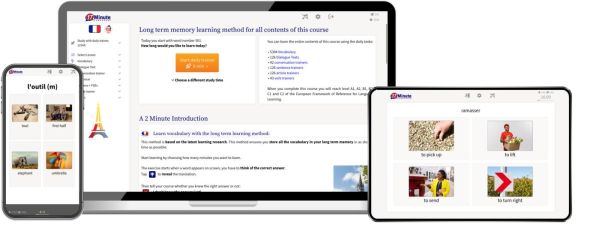
→ French Online Course (A1–A2) – Full Review: The 17-Minute-Languages beginner course is the one I recommend for structured, daily vocabulary learning. 15–20 minutes a day, spaced repetition, A2 level achievable in roughly 3 months. Try it free for 2 days* – no credit card needed.
App-Based Learning: Babbel and Mondly for French
Apps work well as a complement to a structured course, or as a standalone option if your goal is conversational basics rather than formal proficiency. Both Babbel and Mondly cover French thoroughly. The key difference in practice: Babbel’s French lessons are more grammar-aware, while Mondly leans harder into gamification and speaking exercises.
I’ve tested both. If you’re someone who tends to lose motivation with flashcard-only approaches, Mondly’s dialogue-based lessons keep things moving. If you want something closer to a traditional course structure inside an app, Babbel is the better fit.
- → Learn French with Babbel – Levels, content, and honest assessment
- → Learn French with Mondly – What works, what doesn’t, who it’s for
Intermediate French (B1–B2): Moving Past the Plateau
The jump from A2 to solid B1 is where most self-learners stall. You know enough to understand simple texts but not enough to follow native speakers at normal speed. This is the gap I know well from my own French learning – I hit it myself after Abitur and had to be deliberate about pushing through it.
What helped: more vocabulary (1,800+ words at the intermediate level makes a real difference), authentic dialogue texts with native speaker audio, and consistent daily practice rather than irregular long sessions.
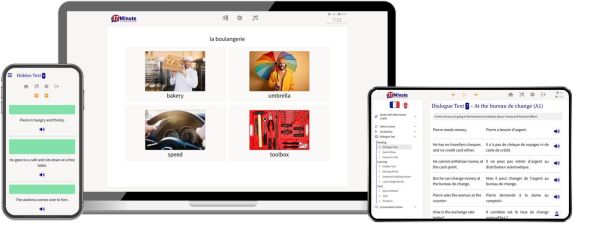
→ Intermediate French Course (B1–B2) – Full Review: The 17-Minute-Languages intermediate course covers 1,800+ new words across realistic topic areas (work, travel, social situations), with native speaker audio throughout. Try the free demo here*.
French Phrases: Practical Language from Day One
One resource that consistently ranks well and gets real use: a curated list of the most common French phrases organized by situation. Whether you’re preparing for a trip or just want to get past the tourist-level exchanges, having 50–100 solid phrases ready to go changes how you interact with the language.
→ Common French Phrases – The most useful everyday phrases with pronunciation guidance

How to Choose the Right French Course for Your Level
The honest answer depends on three things: your current level, your daily time budget, and whether you learn better through structure or through exploration.
| Your Situation | Recommended Starting Point |
|---|---|
| Complete beginner, structured learner | French Online Course (A1–A2) |
| Beginner, prefers app-based learning | Babbel French or Mondly French |
| School French, wants to refresh and improve | Intermediate French Course (B1–B2) |
| Wants quick practical phrases first | Common French Phrases |
| Wants human tutoring alongside course | French tutors on Preply* |
What Actually Makes the Difference When Learning French
After going through this with Norwegian (from scratch to business fluency), Danish, Swedish, and then circling back to deepen my French: the course itself matters less than the habit. 15 minutes every single day beats 2 hours on the weekend, consistently and without exception. Spaced repetition only works if the intervals are actually consistent.
The second thing that made the biggest difference in my French: listening to native speakers early, even when I didn’t understand most of it. French pronunciation is not intuitive for German or English speakers. The nasal vowels, the liaison, the way spoken French sounds nothing like written French – you need to train your ear in parallel with your vocabulary, not after you’ve finished a course.
Third: don’t wait until you feel “ready” to speak. I learned this the hard way with Norwegian – I spent too long in passive learning before forcing myself into real conversations. With French, I started speaking sentences (badly) much earlier in the self-study phase, and the progress was noticeably faster.
Free Resources vs. Paid Courses
There are plenty of free tools for learning French – YouTube channels, Duolingo, language exchange apps. I’m not going to pretend they don’t exist. But in my experience testing 30+ courses and apps across multiple languages: free resources work well for supplementation, not for systematic progress. The structured progression, the spaced repetition, the accountability mechanisms – these come from courses that have been properly built, and that costs money to make.
That said, every course I recommend on this site has a free trial or demo. Try before you buy. The 2-day free trial on 17-Minute-Languages is genuinely useful – you get a real feel for the learning rhythm, not just a preview screen.
For an overview of the research behind spaced repetition and vocabulary acquisition, the Cambridge English blog has a solid explainer that’s worth reading if you want to understand why daily short sessions outperform marathon study.
All French Resources on This Site
- French Online Course – Beginner (A1–A2)
- Intermediate French Course (B1–B2)
- Learn French with Babbel
- Learn French with Mondly
- Common French Phrases
Helpful language learning articles:
- Learning vocabulary successfully
- The different ways of learning languages
- Learning languages quickly – is it possible?
This French course is also available in other languages:

Published Language Author & Expert
Sven has been learning languages through systematic self-study since 2005 – from Norwegian (business fluent) to Danish, Swedish, and French. He is the author of four published vocabulary guides and has tested over 30 language courses and apps. He started French in 7th grade, continued through Abitur, and has maintained and deepened it through independent study since.