Looking for the best Maltese language course? Compare learning options, find out how long it takes to learn Maltese, and start your free trial today.
As someone who has spent over 18 years learning languages through self-study – from Norwegian to Danish, Swedish, and currently Spanish – I know exactly what separates a useful online course from a waste of time. I’ve tested more than 30 language courses and apps over the years, and I’ve published four language learning books documenting my methods. While Maltese isn’t one of the languages I’ve personally studied in depth, my experience evaluating courses across very different language families gives me a solid basis to assess what works.
Maltese is a fascinating and unique language. It is the only Semitic language written in the Latin alphabet, blending Arabic roots with strong Italian and English influences. As the national language of Malta and an official language of the European Union, it connects you to a rich Mediterranean culture. Whether you plan to travel, work in Malta’s growing economy, or simply take on an unusual linguistic challenge – learning Maltese is a rewarding experience.
The problem? Unlike Spanish or French, there are very few Maltese learning resources available. That makes choosing the right course even more important.
🎯 Quick Overview: Learn Maltese Online
- Best for beginners: 17-Minute-Languages Maltese Course (1,300+ words, A2 level in ~3 months)
- Time investment: 15–20 minutes per day is enough for steady progress
- Difficulty: Maltese is considered moderately difficult for English speakers (FSI Category III equivalent)
- Duolingo alternative? Maltese is not available on Duolingo, Babbel, or Rosetta Stone
- Cost: Free 2-day trial, then one-time payment (no subscription)
Is Maltese hard to learn?
This is one of the most common questions I come across, and the honest answer is: it depends on your background. Maltese is classified as a Semitic language, which means its grammar and word roots are fundamentally different from English, German, or other European languages. If you’ve ever studied Arabic, you’ll recognise some patterns – but for most European language learners, Maltese will feel unfamiliar at first.
That said, there are significant advantages that make Maltese more accessible than many people expect:
- Latin alphabet: Unlike Arabic or Hebrew, Maltese uses the Latin script with a few additional characters (ċ, ġ, għ, ħ, ż). You won’t need to learn a new writing system.
- Italian and English loanwords: Roughly 40–50% of Maltese vocabulary comes from Italian and Sicilian, with many modern English terms mixed in. Words like telefon, università, or futbol are immediately recognisable.
- Consistent pronunciation: Maltese is largely phonetic – once you learn the sound rules, you can read and pronounce most words correctly.
From my experience testing language courses across different language families, I can tell you that the difficulty of a language matters far less than the quality of your learning method. A structured course with daily practice sessions will get you further in Maltese than an unstructured approach in an “easy” language. In my own journey from zero to business-level Norwegian, it was the systematic method – not the language itself – that made the difference.
The U.S. Foreign Service Institute (FSI) doesn’t have an official rating for Maltese, but based on its structure, most linguists place it roughly in Category III – meaning approximately 36 weeks (900 class hours) to reach professional proficiency. For conversational basics, however, you can expect to hold simple conversations after 3–4 months of consistent daily practice.
How long does it take to learn Maltese?
Based on my experience with five languages and the Common European Framework of Reference (CEFR), here is a realistic timeline for learning Maltese:
| CEFR Level | What you can do | Time needed (15–20 min/day) |
|---|---|---|
| A1 – Beginner | Greetings, ordering food, basic introductions | ~6–8 weeks |
| A2 – Elementary | Simple conversations, travel situations, daily routines | ~3 months |
| B1 – Intermediate | Discuss opinions, understand news, handle most travel situations | ~8–12 months |
| B2 – Upper Intermediate | Fluent conversation, work-related communication, understand complex texts | ~18–24 months |
These timelines assume consistent daily practice. In my own experience, the learners who progress fastest are not the ones who study for hours on weekends, but those who build a short daily routine – even just 15 minutes at breakfast or on the commute. That’s exactly how I built my Norwegian skills over time, and it’s the approach I recommend for Maltese as well.
The best online Maltese language course for beginners
After evaluating the available options, I recommend the 17-Minute-Languages Maltese course as the best structured course currently available for English speakers. Here’s why:
- 1,300+ vocabulary words taught in context through dialogues and real-life phrases
- Long-term memory method: Words are repeated at scientifically optimised intervals (spaced repetition) – a method I’ve relied on in my own language learning for nearly two decades
- Short learning units: 15–20 minutes per day is enough to make consistent progress
- All content recorded by native speakers – crucial for a language with pronunciation patterns unfamiliar to most Europeans
- Works on any device: PC, tablet, smartphone – your progress syncs automatically
- No subscription: One-time purchase with lifetime access
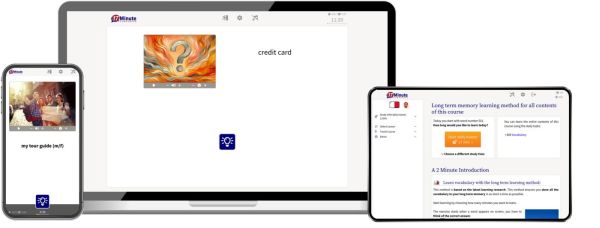
The course covers all essential topics: greetings, travel vocabulary, shopping, asking for directions, expressing opinions, and much more. Each new word is embedded in example sentences so you learn to use it in context – not just as an isolated flashcard.
What I particularly appreciate from a methodological standpoint is the spaced repetition system. Having written four books on vocabulary acquisition myself, I can confirm that this approach is backed by decades of cognitive science research. It’s the same principle I used when building my Norwegian vocabulary from zero to over 5,000 words.
Which Maltese course level is right for you?
For complete beginners, the basic course is the clear starting point. You don’t need any prior knowledge of Maltese.
If you already have some Maltese knowledge – perhaps from time spent in Malta or Maltese family connections – you can take a free placement test to find the right level. The course will then adapt to your current skills.
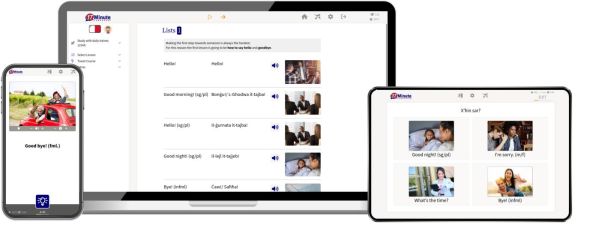
Available course levels:
- Maltese Basic Course – for beginners (A1 to A2)
- Maltese Advanced Course – for intermediate learners (B1 to B2)
- Maltese Business Course – for professional and business communication
Can you learn Maltese on Duolingo, Babbel, or Rosetta Stone?
Short answer: No. As of 2026, Maltese is not available on Duolingo, Babbel, Rosetta Stone, or Busuu. This is one of the biggest challenges for Maltese learners – the mainstream language apps simply haven’t added it.
Here’s a comparison of the realistic options:
| Platform | Maltese available? | Type | Price |
|---|---|---|---|
| 17-Minute-Languages | ✅ Yes | Structured course | One-time payment |
| Duolingo | ❌ No | Gamified app | Free / subscription |
| Babbel | ❌ No | Structured lessons | Subscription |
| Rosetta Stone | ❌ No | Immersion method | Subscription |
| Community college | ⚠️ Rare | Classroom | Medium–high |
| Private tutor | ✅ Yes (iTalki etc.) | 1-on-1 lessons | High |
My advice: for a structured foundation, start with the online course. Once you reach A2, supplement it with a private tutor for conversation practice. That’s the combination that worked best for me across multiple languages.
How the learning method works
The course uses a long-term memory learning method based on spaced repetition. Here’s how it works in practice:
- A new word is introduced with audio, example sentence, and translation.
- You’re asked to recall it the next day. If correct, the interval grows (2 days → 4 → 8 → 16 days).
- If you forget, it goes back to day 1.
- Once a word survives all intervals, it’s stored in your long-term memory.
This is not a gimmick – spaced repetition is one of the most well-researched learning techniques in cognitive psychology. I’ve used this exact principle when building vocabulary for my Norwegian and Danish books, and I’ve seen it work consistently across thousands of words.

You also choose your preferred exercise type each day: multiple choice for quick sessions, text input for deeper recall, or listening comprehension to train your ear. This flexibility is important – from my experience, mixing methods keeps motivation high and prevents the learning from becoming monotonous.
Why learn Maltese? 5 practical reasons
- Travel: Malta is one of Europe’s most popular destinations. Speaking even basic Maltese transforms your experience – locals genuinely appreciate the effort, as very few tourists try.
- Work and business: Malta’s economy is booming, particularly in iGaming, fintech, and tourism. Knowing Maltese gives you a real edge in the local job market. See the Business Maltese section below.
- Culture: Maltese literature, music (għana), and festivals are deeply tied to the language. Understanding Maltese opens a cultural world that English alone cannot access on the islands.
- Cognitive benefits: Learning a language from a different family (Semitic vs. Germanic/Romance) challenges your brain in new ways. Research consistently shows multilingualism supports long-term cognitive health.
- A unique achievement: With only around 520,000 native speakers worldwide, Maltese is a rare skill. It’s a genuine conversation starter and a mark of intellectual curiosity.
Start your online Maltese course now – free of charge!
The advantages at a glance:
- Try it free for 2 days – no payment or credit card data needed
- Flexible learning – on your PC, tablet, or smartphone, whenever and wherever you want
- Short lessons – only 15–20 minutes per day for rapid progress
- Long-term memory method – vocabulary stays in your head permanently
- Native speaker audio – learn authentic Maltese pronunciation from day one
Whether you’re a beginner or advanced learner, this online course will help you achieve your goals step by step.
*
Maltese for Business – Expand your professional vocabulary
If you already have a solid foundation in Maltese and need the language for professional contexts, the Maltese Business Language Course is the logical next step.
Malta has become a major hub for international companies, particularly in financial services, online gaming, and technology. Many businesses operate in English, but professionals who also speak Maltese have a significant advantage in local negotiations, team dynamics, and client relationships. From my own experience working in Norwegian business environments, I can tell you that speaking the local language – even imperfectly – changes how people perceive and trust you.
The Business Maltese course covers:
- Business vocabulary: Meetings, negotiations, presentations, email correspondence
- Intercultural communication: Understanding Maltese business etiquette and professional norms
- Industry-specific terminology: Finance, tourism, legal, and administrative language
- Formal register: How to switch between casual and professional Maltese appropriately
The course uses the same proven long-term memory method as the basic course, supplemented with business-specific dialogues and situational exercises.

Ready for Business Maltese?
If you’ve completed the beginner course or already have intermediate Maltese skills, the Business course is your next step. Try the free 2-day demo to see if it fits your needs.
*
Maltese phrases for your first conversations
To give you a head start, here are some essential Maltese phrases you’ll learn in the course:
| English | Maltese | Pronunciation |
|---|---|---|
| Hello / Welcome | Merħba | [MER-hba] |
| How are you? | Kif inti? | [kif IN-ti] |
| Thank you | Grazzi | [GRAT-tsi] |
| Goodbye | Ċaw | [CHAW] |
| Yes / No | Iva / Le | [EE-va / LE] |
| My name is… | Jisimni… | [ji-SIM-ni] |
Want more? Check out our complete list of 100+ Maltese phrases with pronunciation guide.
Frequently asked questions about learning Maltese
Is Maltese easy to learn for English speakers?
Maltese is moderately challenging for English speakers. The Semitic grammar structure is unfamiliar, but the Latin alphabet and large number of Italian/English loanwords make vocabulary acquisition easier than you might expect. With a structured course and 15–20 minutes of daily practice, most learners reach a conversational level within a few months.
Can I learn Maltese for free?
Free resources for Maltese are very limited compared to major languages. You can find some YouTube channels and basic word lists, but there is no comprehensive free course equivalent to what Duolingo offers for Spanish or French. The 17-Minute-Languages course offers a free 2-day trial so you can test the full course before committing.
Is Maltese similar to Arabic?
Maltese has Semitic (Arabic) roots in its grammar and core vocabulary, but it has evolved significantly over centuries of Italian, French, and English influence. Modern Maltese is a distinct language – if you speak Arabic, you’ll recognise some word patterns, but the languages are not mutually intelligible.
What is the best app to learn Maltese?
As of 2026, no major language app (Duolingo, Babbel, Rosetta Stone, Busuu) offers Maltese. The most comprehensive option for structured online learning is the 17-Minute-Languages Maltese course, which works on all devices including smartphones.
 Learning Maltese is rewarding at any age – and keeps your brain sharp.
Helpful language learning tips:
- The different ways of learning languages
- Learning vocabulary successfully
- Motivated language learning
- It is so easy to train your understanding of a language at the same time
- Learning languages quickly? – Is it possible?
- The different types of learners when learning languages
Maltese language courses in other learning languages:
Written & reviewed by
Sven Mancini
Published Language Author & Language Learning Expert
Author of 4 published language learning books with 18+ years of hands-on experience learning 5 languages through self-study – from beginner to business level. I test every course I recommend for at least 30 days and compare it against the methods that took me from zero Norwegian to fluent professional communication.